
Key Takeaways
- Manual container loading creates genuine heat and visibility risks for dock workers.
- The Ulti Trailer Fan actively moves fresh air into trailers – an engineering control for heat stress under HSWA.
- The Flex Neck Dock Light auto-dims via a radar sensor when forklifts reverse out, preventing blinding glare.
- Both accessories mount on a single flexible arm and can be added to most existing dock setups.
- One Ulti Trailer Fan can service up to two dock openings from a single swivelling arm unit.
Dock Accessories That Protect Your People During Manual Loading
Manual loading and unloading is physically demanding work. When you add heat, humidity, and poor visibility into a trailer or container, you are creating genuine safety risks for your team – and a harder job than it needs to be.
For warehouse and facility managers responsible for busy loading docks, the right accessories can make a real difference to daily working conditions. Under New Zealand’s Health and Safety at Work Act 2015 (HSWA), your obligation as a PCBU is clear: manage risks so far as is reasonably practicable.
In this article, we look at two loading dock accessories designed to tackle those working environment risks directly – the Ulti Trailer Fan and the Flex Neck Dock Light – and how they work together to create a safer, more practical manual loading environment.
What are loading dock accessories?
Loading dock accessories are equipment additions that improve safety, lighting, airflow, or working conditions at a loading dock – separate from the core loading system. Unlike dock levellers, seals, or vehicle restraints, accessories address specific hazards or environmental conditions at the dock face. Common examples include dock lights, trailer fans, wheel chocks, dock bumpers, and communication systems.
Why Manual Loading Creates Real Risk at the Dock
Loading and unloading containers manually is one of the more physically demanding tasks in any warehouse operation. Workers are on their feet, moving loads repeatedly, often in confined spaces – and frequently in conditions that compound the difficulty.
Two hazards come up most often.
Heat inside trailers. Metal containers and trailers absorb radiant heat from the sun. When workers are inside, still air traps the heat they generate, and high humidity stops sweat evaporating efficiently. According to WorkSafe NZ guidance, heat strain builds from a combination of factors: air temperature, humidity, radiant heat, work rate, and airflow. When those factors stack up, as they do inside a trailer on a warm NZ day, heat exhaustion becomes a real risk.
Improving ventilation sits within the engineering controls tier of WorkSafe NZ’s hierarchy of controls – higher up the hierarchy than procedural fixes or PPE. In practical terms, that means actively moving air into the workspace, not just leaving the dock door open and hoping for the best.
Poor visibility and bright lights. When a forklift operator is working inside a trailer, they need clear, consistent illumination. But when they reverse back out into a bright dock light, there’s an immediate hazard: temporary blindness caused by moving from dark to intense light. This is a recognised risk at loading docks, and it’s one that often goes unaddressed because it happens in seconds and doesn’t always lead to an incident. But it only needs to once.
Inadequate lighting is one of the seven most common dock loading hazards – and loading dock safety requirements in New Zealand mean that managing visibility at the dock is part of your PCBU duty of care.
The Ulti Trailer Fan – Moving Air Where Your Team Needs It
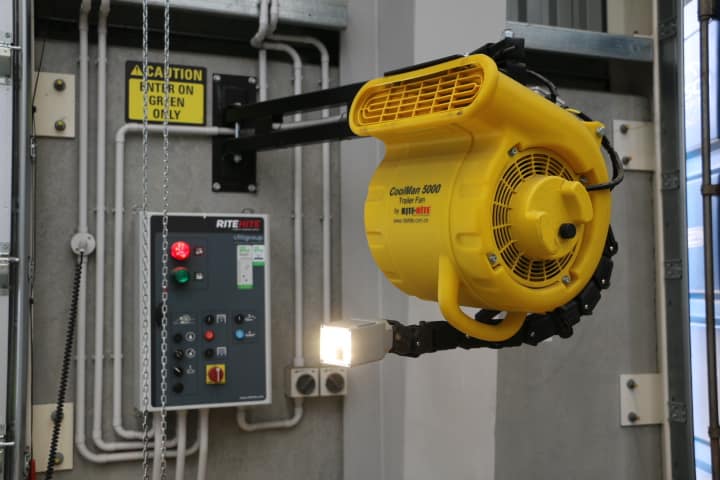
The Ulti Trailer Fan is designed specifically to improve working conditions inside trailers and containers during manual loading and unloading.
It works by circulating air between the trailer interior and the facility, actively pushing fresh air into the container and disrupting the heat that builds up from both the environment and the physical work your team is doing.
What it does in practice
When a container is backed up to the dock, the air inside is often stale and warm. Workers entering to load or unload pallets are immediately working in a heat-loaded space. Without airflow, conditions deteriorate as the physical work generates additional body heat.
The Ulti Trailer Fan draws air in and forces it through the container opening, giving workers continuous fresh airflow throughout the task. As WorkSafe NZ guidance confirms, moving air into the trailer is a practical response to a real problem – and it’s the kind of engineering control WorkSafe NZ’s hierarchy puts ahead of procedural fixes and PPE.
Practical design details
- Swivelling arm: The fan’s arm pivots to direct airflow precisely where it’s needed. One unit can service up to two dock openings, giving you good coverage without requiring a fan at every door.
- Adjustable positioning: The arm can be repositioned as containers change, so airflow is always directed into the active loading space.
- Simple operation: Turn it on, direct it into the container, and your team works in a better environment.
If your facility does regular manual container loading, particularly in summer months or in environments that get warm – the Ulti Trailer Fan is a straightforward engineering control that supports your duty to manage heat-related risk.
The Flex Neck Dock Light – Smarter Lighting for the Dock
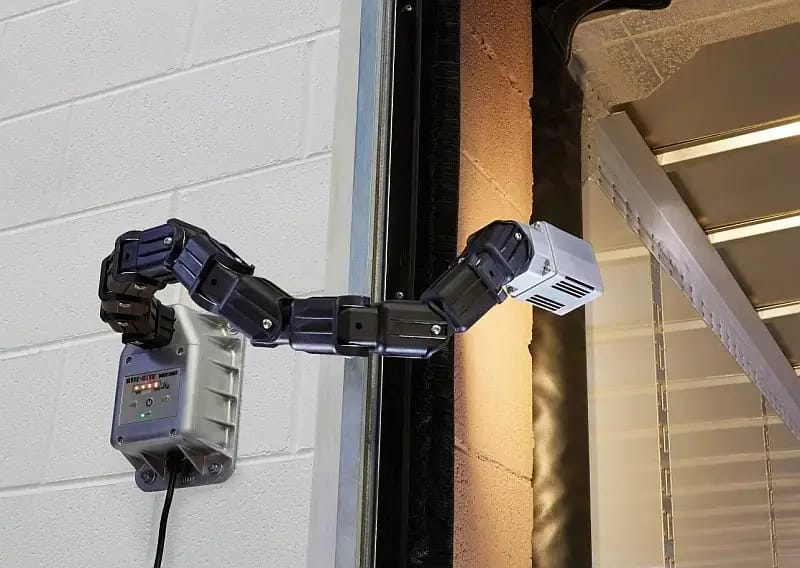
Good dock lighting seems simple. But if you’ve watched a forklift operator reverse out of a container and squint into a blazing floodlight, you’ll understand why the quality and intelligence of that light matters.
The Flex Neck Dock Light is a high-powered LED dock light with an automatic dimming system driven by a built-in radar sensor – a feature that sets it apart from standard dock lighting.
How the auto-dimming works
The radar sensor continuously monitors movement in and around the light’s beam area. When it detects a forklift or operator entering the container, the light provides full illumination for the task. When it detects that the operator is backing out, the light dims automatically, removing the blinding effect before the operator’s eyes have to adjust.
A forklift operator reversing out of a dark container into full floodlight intensity has reduced visibility and slower reaction time precisely when they need both. The Flex Neck Dock Light removes that hazard without any action required from the operator or dock staff.
As Andrew Suckling from Ulti Group explains in the video above, filmed on-site at a major NZ distribution facility: “When the forklift is backing back, this light will actually dim down so you’re not blinded.”
Other features worth knowing
- High-powered LED beam that illuminates the full depth of trailers and containers, reducing shadows and improving visibility for all dock staff
- Aluminium head for durability in the demanding dock environment
- Flexible neck that allows the light to be precisely positioned and redirected as needed
- Manual and auto-dimming options – the light works the way your dock operation requires
- Retrofittable – can be installed on existing dock setups without significant structural changes
If you want to understand dock lighting more broadly before looking at specific products, our guide to what a dock light is and why your facility should use one is a useful starting point. Our full loading dock lights range covers both LED and incandescent options to suit different operational needs and budgets.
Combining Dock Accessories: Fan and Light in One Setup
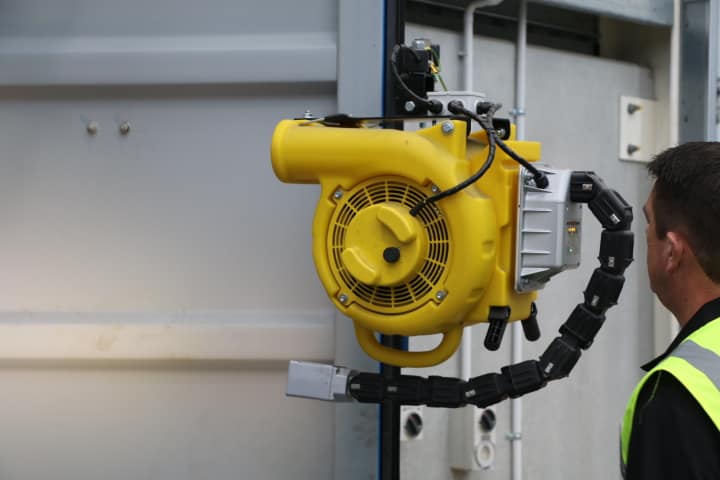
One practical advantages of these two accessories is that they work together on a single flexible arm unit, as shown in the video above.
At the major NZ distribution facility featured, both the Ulti Trailer Fan and the Flex Neck Dock Light are mounted on the same arm. During loading, the arm is extended to direct both airflow and light into the truck. When the container departs, the arm swings clear.
A single, manageable installation delivers two meaningful improvements to your dock environment: better air and better light, both adjustable, both directed where the work is happening.
For facilities doing regular manual loading, especially where containers sit in the sun before docking or where shifts run through warmer parts of the day – this kind of combined setup is a practical, proportionate response to real working conditions.
Is This the Right Setup for Your Facility?
These accessories are well-suited to your facility if:
- ✓
Manual container loading is regular – your team physically works inside trailers or containers to load or unload goods - ✓
Conditions get warm – your dock faces direct sun, or you load during summer months when trailer temperatures climb - ✓
Forklift operators work in and out of containers frequently – the auto-dimming feature has the most impact where reversing is a regular part of the task - ✓
You want engineering-level controls – not just PPE or procedure changes, but physical improvements to the working environment - ✓
You have an existing dock setup – both accessories can be retrofitted without major structural changes
These are accessories, not a full dock loading system. They work alongside your existing dock setup – levellers, restraints, seals, and communication systems – and can be added to most existing dock configurations without major works.
If you are building out or reviewing your full dock safety picture, our logistics and warehousing industry page covers how Ulti approaches the full dock environment for warehouse operations across New Zealand.
Frequently Asked Questions
What’s the difference between a dock light and a dock light communication system? These are two different products. A dock light (like the Flex Neck Dock Light) illuminates the inside of a trailer so workers and forklift operators can see clearly during loading. A dock light communication system uses red and green traffic lights to signal between dock staff and truck drivers – indicating when it’s safe to enter, load, or depart. Many facilities benefit from both.
Are these accessories suited to cold storage or temperature-controlled environments? The Ulti Trailer Fan is specifically designed for hot and humid loading environments where manual work generates heat inside the container. It’s not typically used in cold storage dock environments where maintaining low temperatures is the priority. If your dock loading involves temperature-controlled or chilled goods, talk to an Ulti specialist about the right combination of dock equipment for your setup.
How do I know if my facility actually needs a trailer fan? The fan is most beneficial where manual container loading is a regular task, conditions are warm, and your team works inside the trailer rather than using a fully mechanised loading system. If your dock faces direct sun, you operate through summer months, or your team is physically loading and unloading goods by hand, it’s worth a conversation with Ulti.
Does Ulti supply and install these accessories, or are they self-install? Ulti Group supplies and installs dock equipment and accessories across New Zealand. If you’re considering adding a trailer fan, dock light, or other accessories to your existing dock setup, contact Ulti for a site assessment and installation advice.
What other dock accessories does Ulti supply? Beyond dock lights and trailer fans, Ulti’s dock safety and accessories range includes truck restraints (manual and automatic), smart wheel chocks, dock bumpers, truck wheel guides, dock light communication systems, and loading system integrated controls. The full range is available at the dock safety and accessories page.